
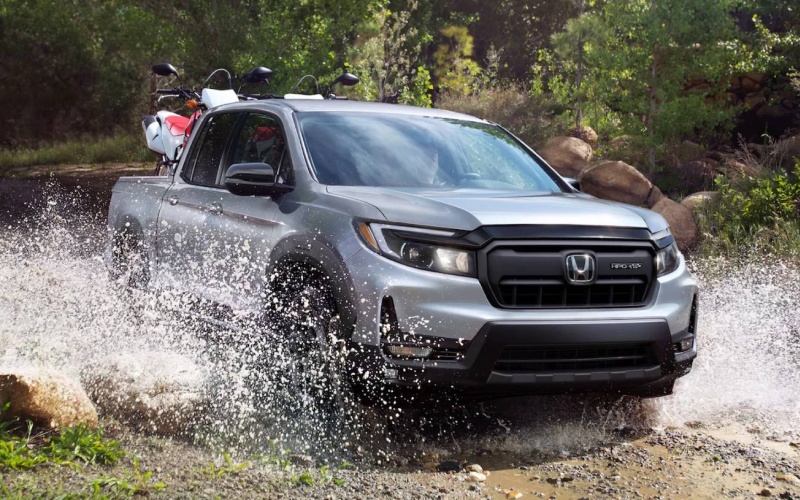
Brad Deery Honda – Which truck rides smoother around Burlington, IA — the 2026 Honda Ridgeline or the 2026 Toyota Tacoma?
When shoppers ask which midsize truck rides smoother, the answer starts with engineering. A vehicle’s structure and suspension geometry do the heavy lifting long before springs and shocks add the final polish. That is why the Honda approach—unibody construction with fully independent front and rear suspension—turns into real-world calm on patched pavement, concrete joints, and washboard gravel. By contrast, the Toyota Tacoma’s traditional body-on-frame layout with a solid rear axle is ideal for slow-speed articulation and trail durability, but it tends to transmit more vibration and head-toss on the everyday roads most of us travel.
This guide unpacks the underlying differences in a clear, straightforward way, then connects them to the daily drives around Burlington, IA. You will also find tips on how to test ride quality during your own back-to-back drive, plus answers to the layered questions that come up when comparing comfort, control, and confidence across seasons.
Why structure shapes ride quality
Unibody designs integrate the body and frame into a single, rigid structure. That rigidity allows engineers to fine-tune suspension mounting points for both precision and compliance. In the 2026 Honda Ridgeline, the fully independent setup at each corner lets the wheels move more freely over bumps, so the cabin stays composed. The Tacoma’s body-on-frame construction is rugged and proven, and its multi-link rear with a solid axle is built for load and trail. That comes with a tradeoff: more motion and a choppier feel at suburban speeds over imperfect surfaces.
Suspension behavior you can feel
On a test loop with potholes, bridge seams, and a few railroad crossings, notice how each truck settles after a disturbance. The Ridgeline typically damps the motion in one clean movement, then continues straight and settled. The Tacoma may add a secondary bounce, especially unladen, because the solid rear axle moves as a unit. Where the Tacoma shines is slow-speed off-road terrain that prioritizes articulation and durability—great for dedicated trail days, less relevant for a Monday commute.
AWD traction versus part-time 4WD
All Ridgelines include i-VTM4® all-wheel drive that can actively distribute torque not only front to rear but also side to side across the rear axle. When rain, snow, or gravel enters the picture, this gives the Honda a seamless, confidence-inspiring character without your involvement. Tacoma’s part-time 4WD systems are robust and highly capable, but they ask the driver to engage modes and, on many grades, they are not operating all the time. If your life includes frequent transitions—dry to damp, paved to gravel—an always-on system can feel more predictable.
Noise, vibration, and harshness (NVH)
Rigidity helps fight squeaks, rattles, and general fatigue. The 2026 Honda Ridgeline’s unibody construction provides that rigid foundation, which supports lower NVH levels. Add in standard features such as Tri-Zone Automatic Climate Control and a well-isolated cabin, and longer drives feel less tiring. Tacoma counters with serious hardware and a sophisticated interior of its own, but the underlying truck-first architecture tends to transmit more of the road into the cabin, especially over time.
Practical differences you will use
Ride quality is not just how a truck soaks up bumps—it’s also how relaxed you feel when you get where you are going. Honda’s Dual-Action Tailgate and lockable In-Bed Trunk® streamline loading and organizing, and the composite bed is shaped so 4-by-8 sheets lay flat. That organization reduces multiple trips and awkward tie-down workarounds that add stress. Tacoma offers excellent off-road upgrades and utility of its own, but if your day looks like school drop-off, jobsite stop, and a pickup at the supply yard, the Honda’s flexibility keeps the pace calm.
How to test ride quality on your own
- Drive the same loop in both trucks: Include a mix of smooth asphalt, patched pavement, a short gravel stretch, speed bumps, and a highway merge.
- Compare how quickly each truck settles: After a bump, count the extra motions until the cabin feels calm again.
- Note steering corrections: On grooved concrete or crosswinds, see how much input is needed to track straight.
- Try a mid-corner bump: Find a safe turn with a surface change; feel whether the chassis stays composed.
- Listen for NVH: Turn the audio down and notice how much road texture comes through at 55 mph.
Comfort features that complement the chassis
Both trucks bring modern technology—large touch screens, wireless smartphone integration, and advanced safety suites. The difference is how those features connect to the overall ride. In the Ridgeline, the 9-inch Display Audio touch-screen, standard wireless Apple CarPlay® and Android Auto™, and available leather-trimmed seating ride atop a platform tuned to be calm. The result is a cabin that stays quiet enough for conversation and navigation prompts, with less need to raise your voice over coarse pavement.
Utility without drama
A smoother ride means you arrive ready to work. Ridgeline’s bed is composite and scratch-resistant, its Dual-Action Tailgate opens sideways for easy access to the In-Bed Trunk®, and optional bed power supports tools or small appliances. Tacoma answers with strong payload capabilities and specialized off-road variants, but if your use case is mixed driving and frequent loading, the Honda’s organization tools contribute to a more relaxed pace and fewer return trips.
Frequently Asked Questions:
Does the Ridgeline’s unibody construction limit durability?
No. The structure uses significant high-strength and ultra-high-strength steel, and Honda engineered the platform for truck duty. The benefit is added rigidity that improves ride quality and noise isolation without sacrificing everyday capability.
How does Honda Sensing® compare to Toyota Safety Sense™ 3.0?
Both suites include comprehensive driver-assist features. Honda Sensing® is standard on every Ridgeline and integrates seamlessly with the truck’s calm chassis character and always-on i-VTM4® AWD. Toyota Safety Sense™ 3.0 is also robust; the difference most drivers notice is the Honda’s overall ease and predictability in mixed conditions.
Will the Ridgeline handle winter and gravel around Burlington, IA?
Yes. Standard i-VTM4® AWD and Intelligent Traction Management (Normal, Snow, Sand, Mud) provide confident control across the varied surfaces and weather you will encounter locally, with minimal driver intervention required.
When you are ready for a test drive, Brad Deery Honda—serving Burlington, Iowa City, and Coralville—can set up a route that highlights the exact surfaces you drive most. Expect a side-by-side that makes the differences obvious after just a few miles, and bring your questions about accessories to tailor the truck to your routine.